UX Design • Information Architecture • Data-heavy UX
Designing a workflow management system for cytology diagnostics, supporting laboratory staff in handling complex, data-heavy processes.
The project started with observing real workflows of nurses and laboratory personnel to understand how tests are recorded, updated, and reviewed in time-sensitive environments. These insights revealed key challenges around navigating large datasets, maintaining accuracy, and performing repetitive tasks efficiently.
Based on this, I focused on structuring information, simplifying core actions, and improving search and filtering across the system. I designed wireframes and interaction patterns that supported fast data entry, clear status tracking, and easier navigation between records.
The final interface reduced cognitive load and helped users work more efficiently, supporting quicker access to information and more reliable handling of diagnostic data.
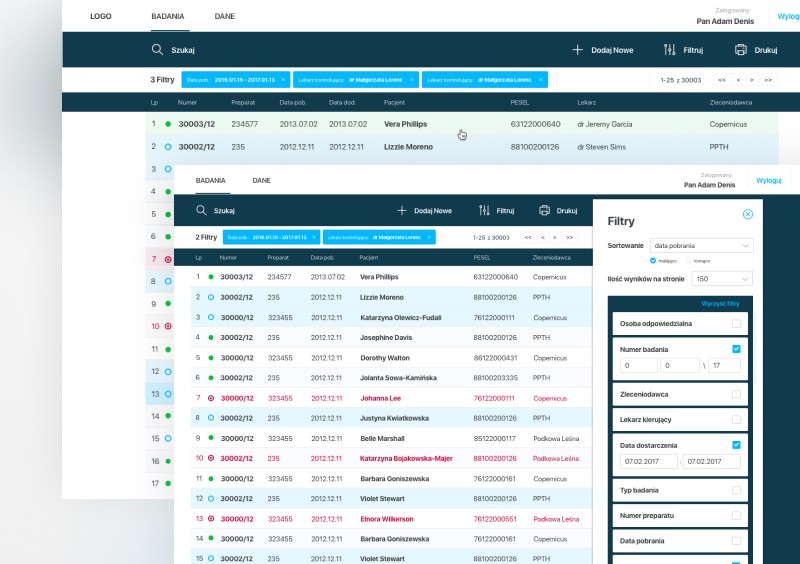
Main data list for handling and reviewing cytology records.
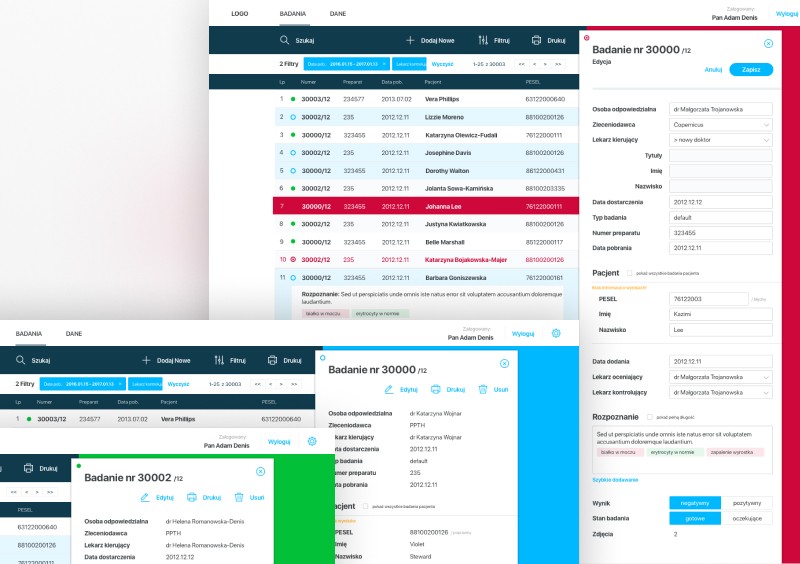
List and preview view with color-coded statuses supporting quick recognition.
WHAT I LEARNED
Designing for a data-heavy diagnostic system exposed me to the challenges of structuring complex information for professional users. It reinforced the importance of clear workflows, efficient data handling, and minimizing cognitive load in systems where accuracy and speed are critical.
This experience shaped my approach to designing structured, reliable interfaces for complex environments.